St Mark's Basilica
Facts checked in November 2026 against the Procuratoria di San Marco's published price list, visitor rules and timetable.
St. Mark's Basilica is the gold-mosaic cathedral on Piazza San Marco and the one building in Venice nearly every visitor wants to see inside. Entry to the church costs €10 (about £8.30) and is sold online for a named, timed slot, while the Pala d'Oro altarpiece, the museum with the original bronze horses and the terrace over the square cost extra. The visit inside the church is short and strictly managed, so a little preparation goes a long way. This guide explains what each ticket covers, the rules at the door and how to fit the basilica into a day in Venice.
- Basilica entry€10 (about £8.30)
- Full ticket€30 with Pala d'Oro and terrace
- Bell tower€15, separate ticket
- OpenMon-Sat 09:30-17:15
- Sundaychurch from 14:00
- Time insideabout 20 minutes
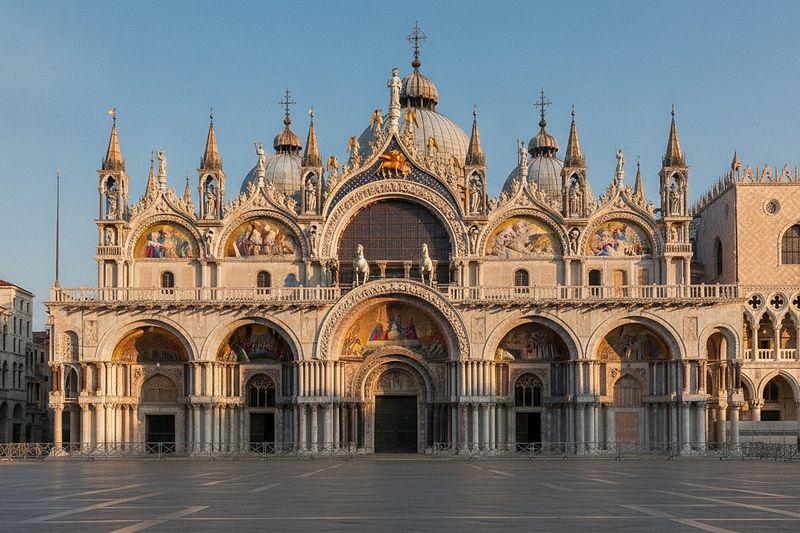
Why the basilica is worth your time
For almost a thousand years St. Mark's was the private chapel of the doges, the state church of the Venetian Republic, not the city's cathedral. That explains its looks. Venice spent its trading wealth here, and after the Fourth Crusade of 1204 it filled the church with treasures carried off from Constantinople: the four bronze horses, the Nicopeia icon of the Virgin, enamels for the high altar and a set of Byzantine reliquaries. The building you see today was begun in 1063 and consecrated in 1094 to house the body of St Mark the Evangelist, which two Venetian merchants smuggled out of Alexandria in 829. It became the cathedral of the Patriarch of Venice only in 1807, after the fall of the Republic.
Inside, the domes, vaults and upper walls are covered in mosaics on a gold ground, often quoted at more than 8,000 square metres. Work on them started in the 1070s and carried on for centuries, so you can walk from Byzantine saints to Renaissance designs in a few steps. The floor is a patchwork of marble inlays, uneven after centuries of subsidence and flooding. The official name is Basilica di San Marco, and you will see that on every sign and ticket.
The basilica in numbers
- 829: the year the relics of St Mark reached Venice.
- 1094: consecration of the present church.
- 5: main domes over a Greek-cross plan.
- 1,927: precious stones and gems on the Pala d'Oro, set around about 250 enamels.
- 98.6 m: height of the bell tower, rebuilt after it collapsed in 1902.
- 20 minutes: the maximum time the rules allow on the route through the church.
Ticket options at a glance
These are the prices for individual visitors on the official booking site of the Procuratoria di San Marco, which runs the basilica. Every ticket is issued in the visitor's name and is valid for one date and time slot. Pound figures are rough conversions at about €1.20 to the pound.
| Ticket | Price | About in pounds | What it covers |
|---|---|---|---|
| Basilica | €10 | £8.30 | the church on the set route |
| Basilica and Pala d'Oro | €20 | £16.70 | church plus the gold altarpiece |
| Basilica, Museum and Loggia | €20 | £16.70 | church plus museum, horses and terrace |
| Full ticket | €30 | £25 | church, Pala d'Oro, museum and terrace |
| Museum and Loggia only | €14 | £11.70 | Sunday mornings and during services |
| Bell tower (Campanile) | €15 | £12.50 | lift to the bell chamber, separate entrance |
Official price list checked in November 2026. Children under 11 go free (an older document says under 10); minors, students up to 26 and over-65s get an extra 50% off on proof of status.
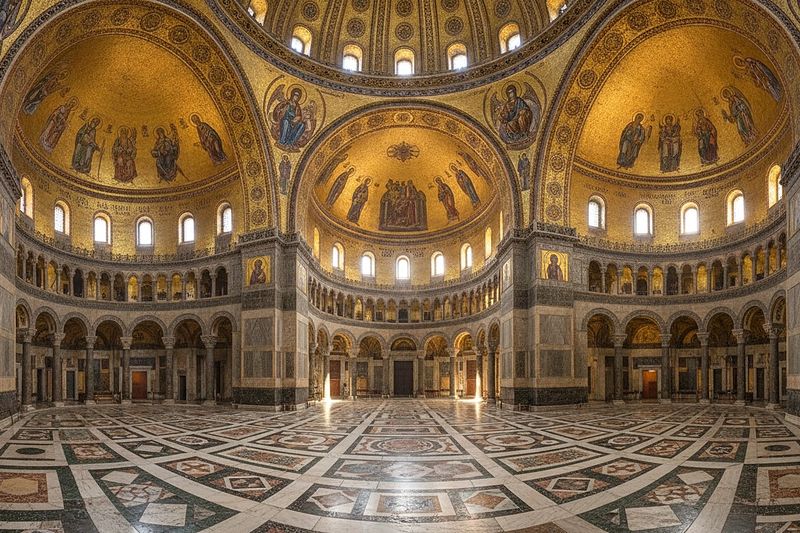
Which ticket makes sense for you
If you only have an hour in Venice, the plain €10 Basilica ticket is enough to see the mosaics, which are the main event. Most people who skip the extras regret it, though. The Pala d'Oro sits behind the high altar and you only see it with the add-on; it is one of the richest pieces of medieval goldwork anywhere. The museum upstairs holds the original bronze horses and leads onto the Loggia dei Cavalli, the terrace above the main door, with the classic view down Piazza San Marco. For a first visit the €30 full ticket is the simple choice: it costs exactly what the church plus both add-ons would cost separately, and you will not be tempted to skip a part to save a few euros.
The bell tower is a different attraction with its own entrance at the foot of the tower across the square. It is never included in the basilica tickets and there is no free entry for anyone. A lift takes you to the bell chamber, so there are no stairs to climb. Because it stays open into the evening, it pairs well with a morning basilica slot.
A bonus most visitors miss
Since 1 July 2025 every ticket that includes the basilica also lets you into the cathedral of Santa Maria Assunta on Torcello, the sacristy of the Salute, the Pinacoteca Manfrediniana and about forty other Venetian churches within six months of purchase. That list includes Santa Maria dei Miracoli, Madonna dell'Orto, San Sebastiano and the sacristy and crypt of San Zaccaria. Several of these used to charge their own entry, so keep your ticket on your phone for the rest of your stay.
Plan your visit
Opening hours in short
From Monday to Saturday the church and the Pala d'Oro open at 09:30, take the last visitors at 16:45 and close at 17:15. On Sundays and public holidays the church is reserved for Mass in the morning and opens to visitors at 14:00, with the same 16:45 last entry. The museum and the terrace keep 09:30 to 17:15 every day, and on Sunday mornings they are the only part you can visit. The bell tower opens at 09:30 all year and closes at 19:15 in winter and 21:15 in summer. Times change on major feast days and when the Patriarch celebrates, so check the calendar if your date falls on a religious holiday. The full timetable is on our opening hours page.
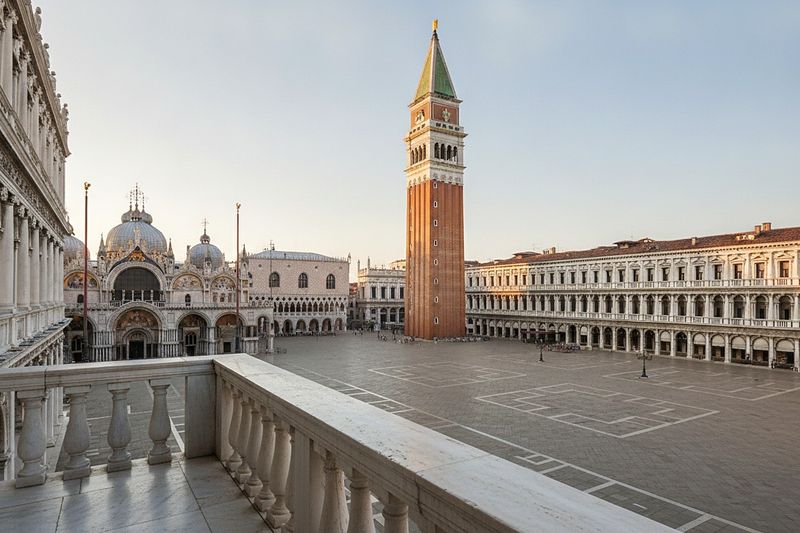
How to get there in short
The basilica stands on the east side of Piazza San Marco. The closest water bus stop is San Zaccaria, about five minutes' walk along the waterfront. From the railway station or Piazzale Roma, vaporetto line 1 takes about 25 minutes down the Grand Canal and line 2 about 40 minutes, or you can walk in 30 to 45 minutes following the yellow signs to San Marco. From Marco Polo airport the Alilaguna Orange line runs to San Marco in about 70 minutes. All the options, with fares, are on the getting there page.
The rules at the door
The basilica is first of all a church, and the staff at the entrance enforce the rules. Three things catch people out most often.
- Dress code: shoulders must be covered and skirts and shorts may not be too short; deep necklines are refused and men take off their hats. A light scarf in your bag solves most problems in summer.
- Bags: backpacks and bags larger than 40 x 30 x 20 cm are not admitted and wheeled luggage never is. Everyone passes through a metal detector and bags may be searched.
- Your ticket: it carries your name and you need a valid ID. Arrive on time: the tolerance is about five minutes after the start of your slot.
Inside, photos for personal use are allowed, but no tripods, no streaming and no professional kit. Phones go on silent, food and drink stay outside and you cannot sit down on the route. We cover all of this, with ideas for what to do with luggage, on the practical tips page.
A simple plan for your visit
- Book the slot first
Choose your date and time online and decide on the add-ons at the same time. Morning slots on weekdays are the calmest; Sunday mornings are out because of Mass.
- Arrive ten minutes early
Individual visitors queue at the main front. Have the QR code and your ID ready and leave any large bag at your hotel.
- Walk the church route
Look up: the domes tell the story of the Pentecost, the Ascension and the Creation. Do not hurry the narthex, the entrance hall with the oldest Old Testament mosaics.
- Pala d'Oro behind the altar
Follow the signs to the presbytery. You have up to ten minutes in front of the altarpiece.
- Museum and terrace last
Climb the steep staircase near the entrance to the museum, see the original horses, then step out onto the Loggia for the view over the square.
- Bell tower later in the day
Cross the square and take the lift up the Campanile, ideally in the late afternoon when the light turns warm over the lagoon.
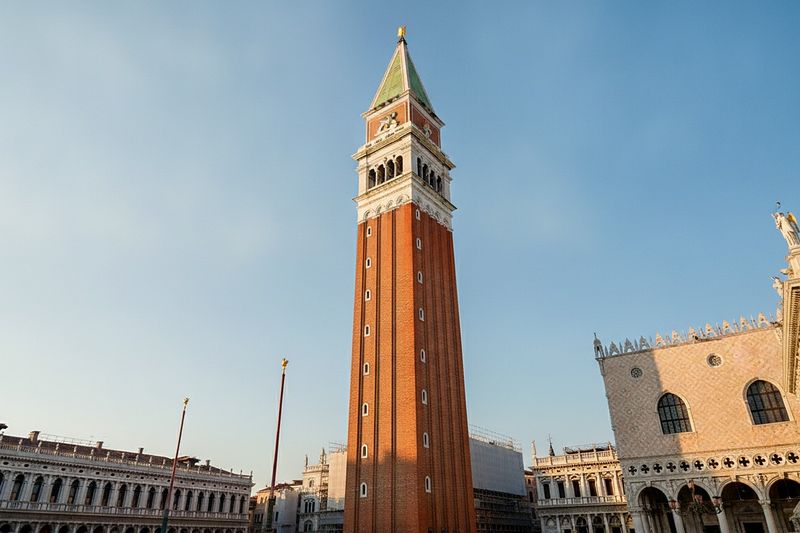
Guided visit or on your own
On your own, the basilica is cheap and quick but can feel overwhelming: there are no labels on the mosaics and the route keeps moving. A guide explains what you are looking at, and some guided tours include the evening openings when the church is lit up and almost empty. Those night visits are sold only to groups with a licensed guide, for €1,500 per group of up to 30, so for an individual traveller the realistic way in is a shared tour from a tour company. Read more on the what to see page.
Mistakes that cost money or time
- Turning up without a booking. Individual tickets are sold online for a time slot. On busy days slots go early and there is no counter to fall back on.
- Coming on a Sunday morning. Only the museum is open before 14:00.
- Buying the plain ticket and wishing you had not. The add-ons cannot always be bought on the spot if your slot is full.
- Bringing a backpack. There is no official cloakroom, and you may lose your slot looking for storage.
- Forgetting the day-tripper fee. On peak days in spring and summer Venice charges visitors who do not stay overnight an access fee. In 2026 it applied on 60 days between 3 April and 26 July, from 08:30 to 16:00, at €5 booked in advance or €10 at short notice. The city has not yet confirmed the 2027 calendar.
Frequently asked questions
How much does it cost to go into St. Mark's Basilica?
Entry to the church costs €10, about £8.30. The Pala d'Oro or the museum with the terrace each add €10, and the full ticket with everything is €30. The bell tower is a separate €15 ticket.
Is St. Mark's Basilica free to enter?
Not for most tourists. Free entry is limited to children under 11, disabled visitors with a companion, clergy and residents of Venice and a few nearby towns. You can attend Mass free of charge, but not as a sightseeing visit.
Do I need to book in advance?
Yes in practice. Tickets for individual visitors are sold online with a named, timed slot, and popular times sell out, especially from spring to autumn and at weekends.
How long does the visit take?
The route through the church is limited to about 20 minutes. With the Pala d'Oro, the museum and the terrace, allow 60 to 90 minutes in total.
What should I wear?
Covered shoulders, and skirts or shorts that are not too short. Men must remove their hats. Comfortable flat shoes help on the uneven floors and steep museum stairs.
Can I take a backpack inside?
Only if it is no larger than 40 x 30 x 20 cm. Larger bags and all wheeled luggage are refused at the door.
Is the basilica open on Sundays?
Yes, but the church opens to visitors only at 14:00. On Sunday mornings you can visit the museum and the terrace.
Is the bell tower included?
No. The Campanile has its own €15 ticket and entrance, and no one gets in free.
Can I take photos inside?
Yes, for personal use and without flash, tripods or professional equipment. Filming for broadcast or live streaming is not allowed.
Do I have to pay the Venice access fee to visit the basilica?
Only if you visit Venice as a day-tripper on one of the fee days. In 2026 those were 60 days between April and July. Hotel guests are exempt but must register.